Longevity & Healthy Living · 10 min read
Notes from the Mediterranean Table
On good food, long-held traditions and what the Mediterranean way of eating can teach us about living well.
· Updated
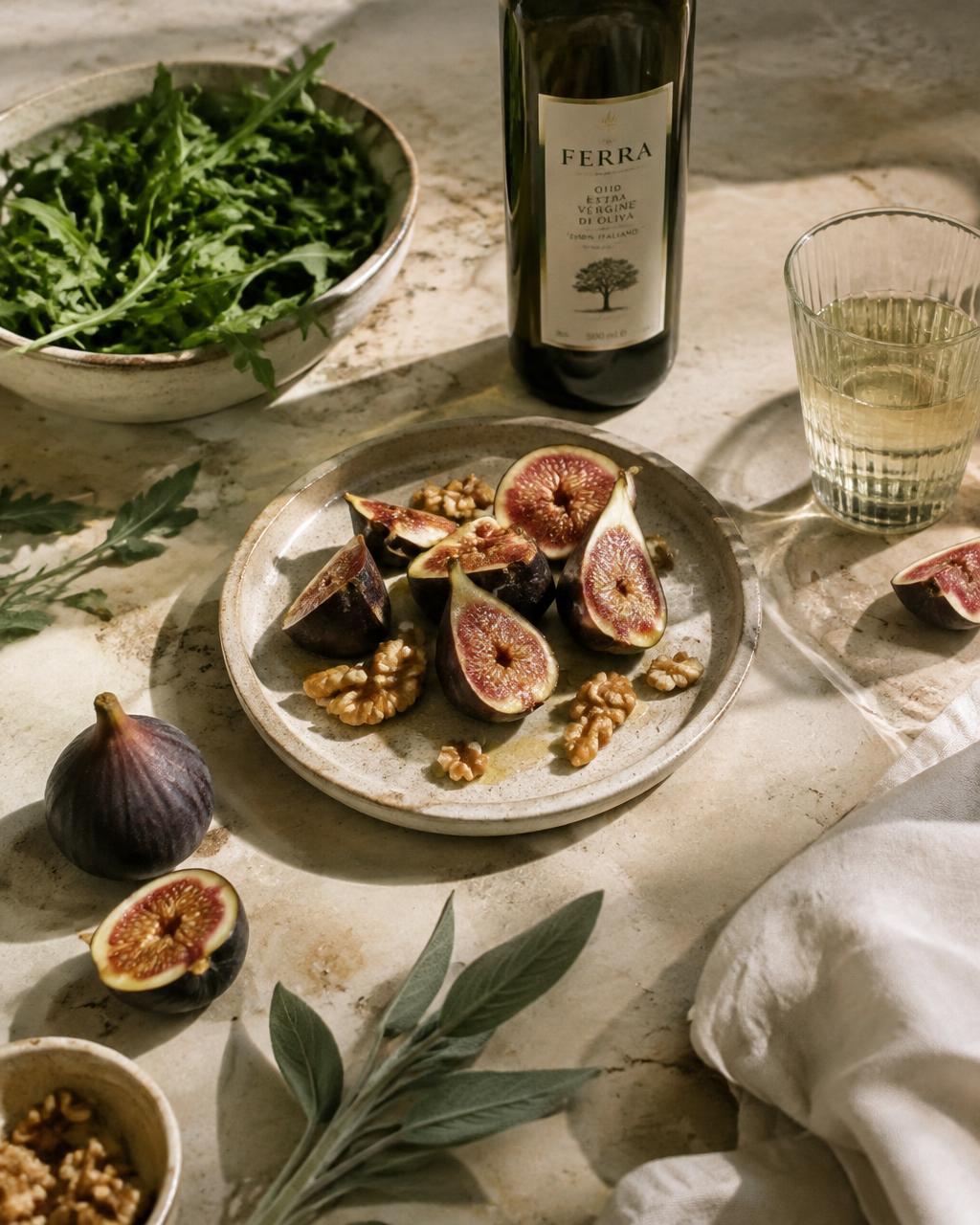
There is something wonderfully uncomplicated about a Mediterranean table.
A bowl of ripe tomatoes dressed with olive oil. Warm bread torn and shared. A plate of olives, fresh herbs, perhaps a little cheese. The afternoon sun moving slowly across the table as conversations continue long after the plates have been cleared.
Nothing is particularly elaborate, yet everything feels considered.
Food, in these moments, is more than nourishment. It is a reason to gather, an expression of hospitality and a familiar pleasure woven into everyday life.
Across Greece, Cyprus, Italy and the wider Mediterranean, these traditions have been passed between generations. Recipes are remembered rather than measured. Ingredients are chosen with the seasons. The kitchen is often as much a place of conversation as it is of cooking.
And while contemporary Mediterranean life is far more varied than any romantic picture might suggest, there are valuable lessons hidden within these familiar customs.
In recent decades, scientists have become increasingly interested in the traditional Mediterranean dietary pattern and its association with cardiovascular health and healthy ageing.
But perhaps one of its most appealing qualities has little to do with the word diet at all.
It's a way of approaching food that leaves room for nourishment, pleasure and connection.
More Than a Diet, a Way of Life
The term Mediterranean diet is often used to describe a pattern of eating associated with traditional food cultures around the Mediterranean Sea.
But there is no single Mediterranean menu.
A family table in Cyprus will look different from one in southern Italy or coastal Morocco. Ingredients, preparations and traditions vary between countries, villages and even households.
What these food cultures have often shared, particularly in the traditional dietary patterns studied by researchers, is an emphasis on vegetables, fruits, legumes, grains, nuts and olive oil, complemented by varying amounts of dairy, eggs, fish and other animal foods.
The proportions matter more than any single ingredient.
In fact, the Mediterranean diet is recognised by UNESCO as part of humanity's Intangible Cultural Heritage.
The recognition extends far beyond nutrition. It celebrates the knowledge, practices, agricultural traditions, hospitality and shared meals that connect communities across the region.
It's a beautiful reminder that food has always played more than one role in our lives.
It nourishes the body.
But it can also preserve memories, strengthen relationships and give familiar moments meaning.
Why Scientists Keep Returning to the Mediterranean Table
Few dietary patterns have attracted as much scientific attention as the Mediterranean diet.
Researchers have investigated its potential relationship with cardiovascular disease, metabolic health, cognitive ageing and longevity.
One of the best-known studies is the PREDIMED trial, conducted in Spain.
The study involved more than 7,000 adults who were considered at elevated cardiovascular risk. Participants were assigned to different dietary approaches, including Mediterranean diets supplemented with extra-virgin olive oil or nuts.
The trial, subsequently reanalysed and republished in 2018 after problems with aspects of the original randomisation were identified, found fewer major cardiovascular events among participants assigned to the Mediterranean dietary groups than among those in the comparison group.
The findings helped strengthen scientific interest in this eating pattern.
However, these cardiovascular findings do not establish that the diet causes people to live longer or will prevent disease in everyone.
A 2025 umbrella review of clinical trial evidence also reported potentially favourable cardiovascular outcomes, while highlighting limitations in the quality and certainty of much of the available research.
So what can we reasonably take from the evidence?
That a Mediterranean-style dietary pattern is a well-supported option for heart-healthy eating, particularly when it replaces diets higher in saturated fat and less nutritious, highly processed foods.
Its benefits are thought to arise from the overall combination of foods and nutrients, not from one magical ingredient.
And when it comes to longevity, the distinction matters.
Eating well can contribute to healthier ageing, but no dietary pattern can guarantee a longer life.
The Ingredients That Make the Difference
The beauty of Mediterranean-inspired eating is that its foundations are refreshingly familiar.
Olive oil: the everyday essential
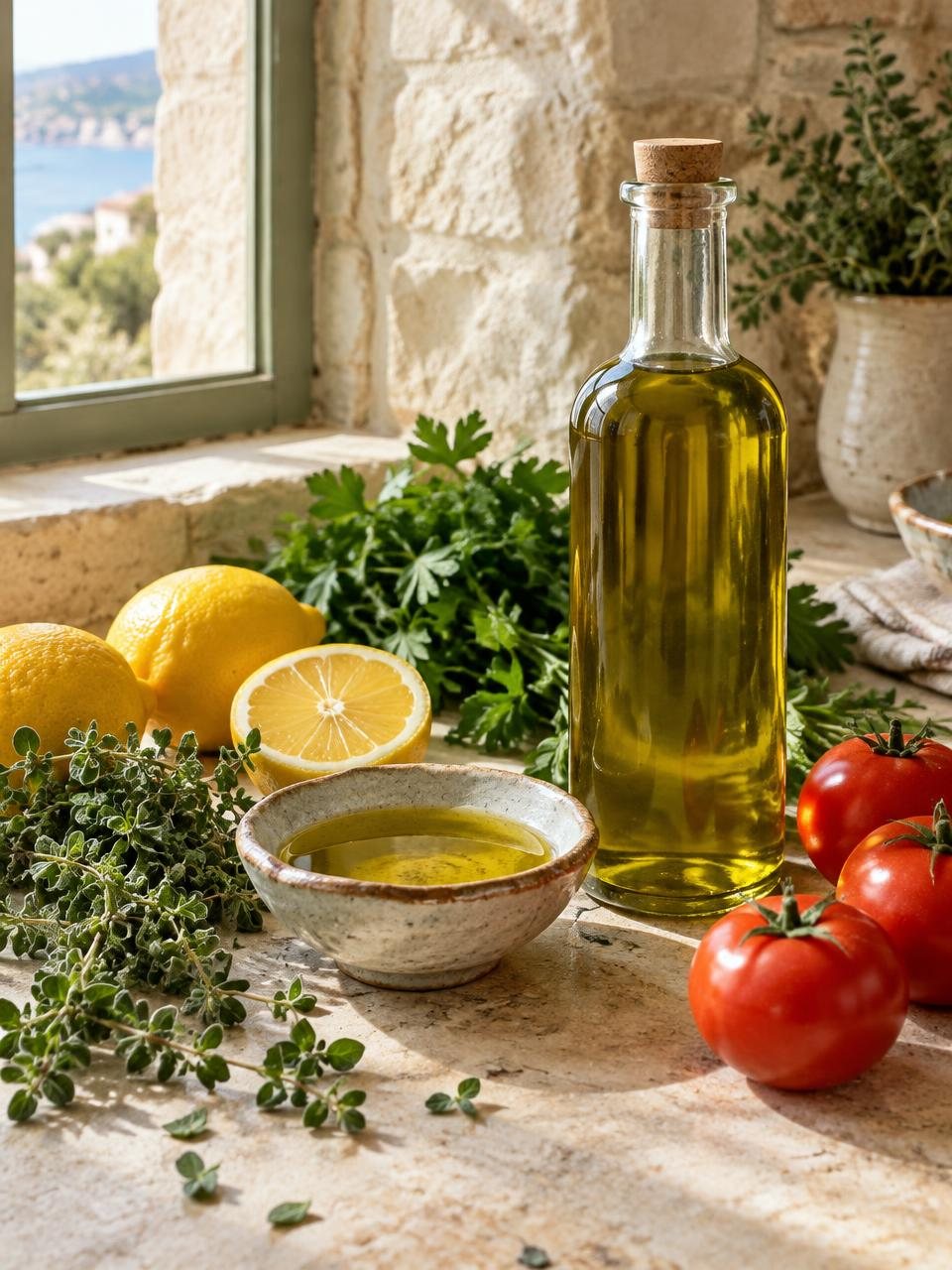
Few ingredients are as closely associated with Mediterranean cooking as olive oil.
Rich in monounsaturated fat, it is often used in place of butter and other fats containing more saturated fat.
Extra-virgin olive oil also contains naturally occurring plant compounds known as polyphenols.
While these compounds are an active area of research, olive oil's place in a healthy eating pattern is best understood in the context of the foods it accompanies and the fats it replaces.
A drizzle over vegetables, a little added to a salad or a spoonful used in everyday cooking can all be part of the pattern.
There is no need to drink olive oil on its own or consume excessive quantities in pursuit of better health.
Sometimes, the traditional use is the most sensible one.
Vegetables, herbs and the beauty of variety
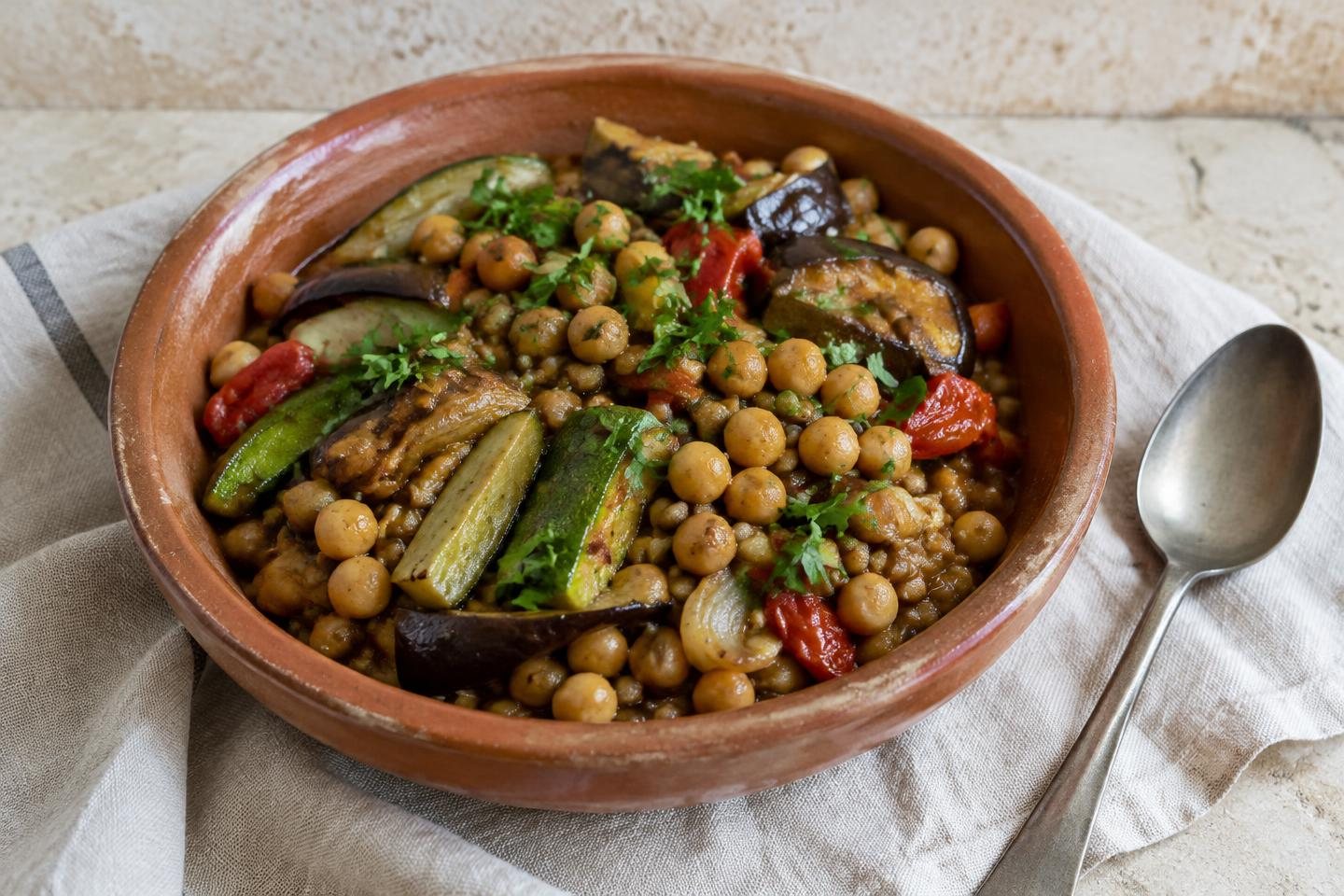
Tomatoes, leafy greens, aubergines, courgettes, peppers and seasonal vegetables are staples of many Mediterranean kitchens.
They're often prepared simply, with olive oil, lemon, garlic and fresh herbs.
Beyond their vibrant colours and flavours, vegetables provide dietary fibre, vitamins, minerals and a variety of beneficial plant compounds.
Different vegetables offer different combinations of nutrients, which is why variety matters.
A colourful salad alongside dinner, greens folded into a family recipe or roasted seasonal vegetables can add meaningful nutritional value without requiring a complete change in how you eat.
Legumes: the overlooked foundation
Chickpeas, lentils and beans rarely receive the same attention as more fashionable wellness ingredients.
Yet they are an important part of traditional Mediterranean food cultures.
Affordable, versatile and naturally rich in fibre, legumes also provide plant-based protein and a range of micronutrients.
Think of a slow-cooked lentil soup with lemon, chickpeas tossed with parsley and olive oil, or white beans simmered with tomatoes and herbs.
These are humble dishes, but nutritionally valuable ones.
And they demonstrate an important principle: nourishing food doesn't need to be expensive or complicated.
Nuts, seeds and whole grains
A handful of walnuts or almonds. A piece of wholegrain bread. A bowl of oats or barley.
These simple foods contribute fibre and, depending on the food, beneficial unsaturated fats, protein and minerals.
Their value comes from how they fit into an overall eating pattern.
Rather than pursuing a particular superfood, the Mediterranean approach encourages variety and consistency.
It is everyday nutrition rather than nutritional perfection.
It is everyday nutrition rather than nutritional perfection.
The Connection Between Food and Healthy Ageing
The idea of eating for longevity has become increasingly popular.
From supplements promising cellular rejuvenation to elaborate nutritional routines, the wellness industry often presents healthy ageing as something that can be optimised through a collection of specialised interventions.
But some of the most established approaches to supporting long-term health remain remarkably ordinary.
Eating a varied diet.
Staying physically active.
Getting sufficient sleep.
Avoiding smoking.
Maintaining meaningful relationships.
The Mediterranean dietary pattern fits naturally into this broader picture.
Its emphasis on plant foods, fibre and unsaturated fats aligns with established recommendations for cardiovascular health.
Research also continues to explore its potential relationships with cognitive health, metabolic function and healthy ageing.
However, evidence for particular longevity outcomes is not equally strong, and observational associations cannot prove that food alone caused people to live longer.
It is also important to remember that genetics, healthcare, income, environment and many other factors influence how we age.
The Mediterranean diet is not a formula for immortality.
What it offers is something more useful: an achievable, adaptable approach to eating that can support health over time.
And perhaps that is precisely why it remains relevant.
Five Ways to Bring the Mediterranean Table Into Everyday Life
You don't need to live beside the sea, shop at a village market or learn an entirely new collection of recipes to embrace Mediterranean-inspired eating.
Begin with what is accessible, familiar and enjoyable.
Ritual 1: Make plants a familiar presence
Rather than completely redesigning your meals, start by adding more vegetables, beans, lentils, fruit or whole grains to foods you already enjoy.
A tomato and cucumber salad alongside dinner. Lentils added to soup. Fresh fruit served after a meal.
Small changes can become lasting habits.
Ritual 2: Let simple ingredients do the work
Fresh lemon, garlic, oregano, parsley and olive oil can transform ordinary ingredients.
Mediterranean cooking often celebrates the natural flavour of food rather than disguising it beneath complicated preparations.
Choose ingredients you enjoy and let simplicity be part of the pleasure.
Ritual 3: Build meals around variety
There is no need to eat the same carefully calculated plate every day.
Try rotating vegetables, legumes, grains and protein sources throughout the week.
Fish is included in many traditional Mediterranean dietary patterns, but those who don't eat seafood can still enjoy a nutritious Mediterranean-inspired approach built around legumes, nuts, eggs, dairy, poultry and other suitable foods.
The goal is balance, not rigid adherence to a list.
Ritual 4: Rediscover the shared meal
There is a particular pleasure in sitting down to eat with people you care about.
Not every meal needs to become a long family gathering, and eating alone can be equally enjoyable.
But when the opportunity arises, consider giving a meal your full attention.
Set the table. Put your phone aside. Enjoy the conversation.
The value of sharing food is cultural and personal as much as nutritional.
It reminds us that wellbeing includes the quality of our everyday experiences.
Ritual 5: Leave room for enjoyment
Mediterranean-inspired eating doesn't require eliminating every dessert, celebration or indulgent family recipe.
And despite the association between Mediterranean dining and wine, there is no need to start drinking: the American Heart Association advises those who don't drink alcohol not to start.
The emphasis is on an overall pattern of eating, not individual moments of perfection.
There will be birthday cakes, takeaway dinners, celebrations and busy evenings when convenience takes priority.
A healthy relationship with food should have room for real life.
A healthy relationship with food should have room for real life.
A Mediterranean-Inspired Table, Made Simple
Imagine an evening meal that requires very little planning.
A large bowl of tomatoes, cucumber and leafy greens dressed with olive oil and lemon.
A warm dish of chickpeas with herbs and garlic.
Roasted vegetables served with wholegrain bread and a little yoghurt or cheese.
Perhaps grilled chicken, eggs or another protein you enjoy.
Fresh seasonal fruit to finish.
Nothing needs to be expensive, elaborate or prepared from scratch.
The ingredients can be adjusted to suit dietary needs, personal tastes and whatever happens to be available.
The result is more than a collection of healthy foods.
It's a relaxed, satisfying meal that reflects the central idea of Mediterranean-inspired eating: good nourishment can be part of a pleasurable everyday life.
Closing note
The CALIADNE Perspective
At CALIADNE, we believe the most meaningful approach to wellness is one that can be lived, not merely followed.
The Mediterranean table represents this beautifully.
It reminds us that nourishment doesn't have to be restrictive, that healthy habits can be deeply enjoyable and that some of life's greatest pleasures remain wonderfully simple.
A meal prepared with care.
The familiarity of a family recipe.
Fresh ingredients chosen for their flavour.
An extra few minutes at the table because the conversation is worth continuing.
Scientific research gives us important reasons to value nutritious dietary patterns.
But culture gives those patterns character, memory and meaning.
Perhaps the lasting lesson of the Mediterranean table is not that we need to eat perfectly.
It's that we can learn to nourish ourselves while still enjoying the beautiful, ordinary experience of being alive.
Because living well is not only about adding years to life.
It's also about finding more pleasure, connection and meaning in the years we have.
The Art of Living Well.
Further Reading & Research
- American Heart Association — What Is the Mediterranean Diet?
- UNESCO — Mediterranean Diet: Intangible Cultural Heritage
- Estruch et al. — PREDIMED Trial, New England Journal of Medicine (2018)
- Hareer et al. — Mediterranean Diet and Cardiovascular Disease: Umbrella Review (2025)
- American Heart Association — Life's Essential 8: Eat Better
- American Heart Association — Is drinking alcohol part of a healthy lifestyle?
- Harvard T.H. Chan School of Public Health, The Nutrition Source — Legumes and Pulses
- Harvard T.H. Chan School of Public Health, The Nutrition Source — Vegetables and Fruits
- Harvard T.H. Chan School of Public Health, The Nutrition Source — Nuts for the Heart
- Harvard T.H. Chan School of Public Health, The Nutrition Source — Whole Grains
- Harvard Health Publishing — Extra-virgin olive oil may be healthier than regular olive oil
- Harvard T.H. Chan School of Public Health, The Nutrition Source — Types of Fat
This article is intended for general education and inspiration. Individual dietary needs vary, and personalised nutrition or medical advice should be sought when appropriate.
← Back to Journal